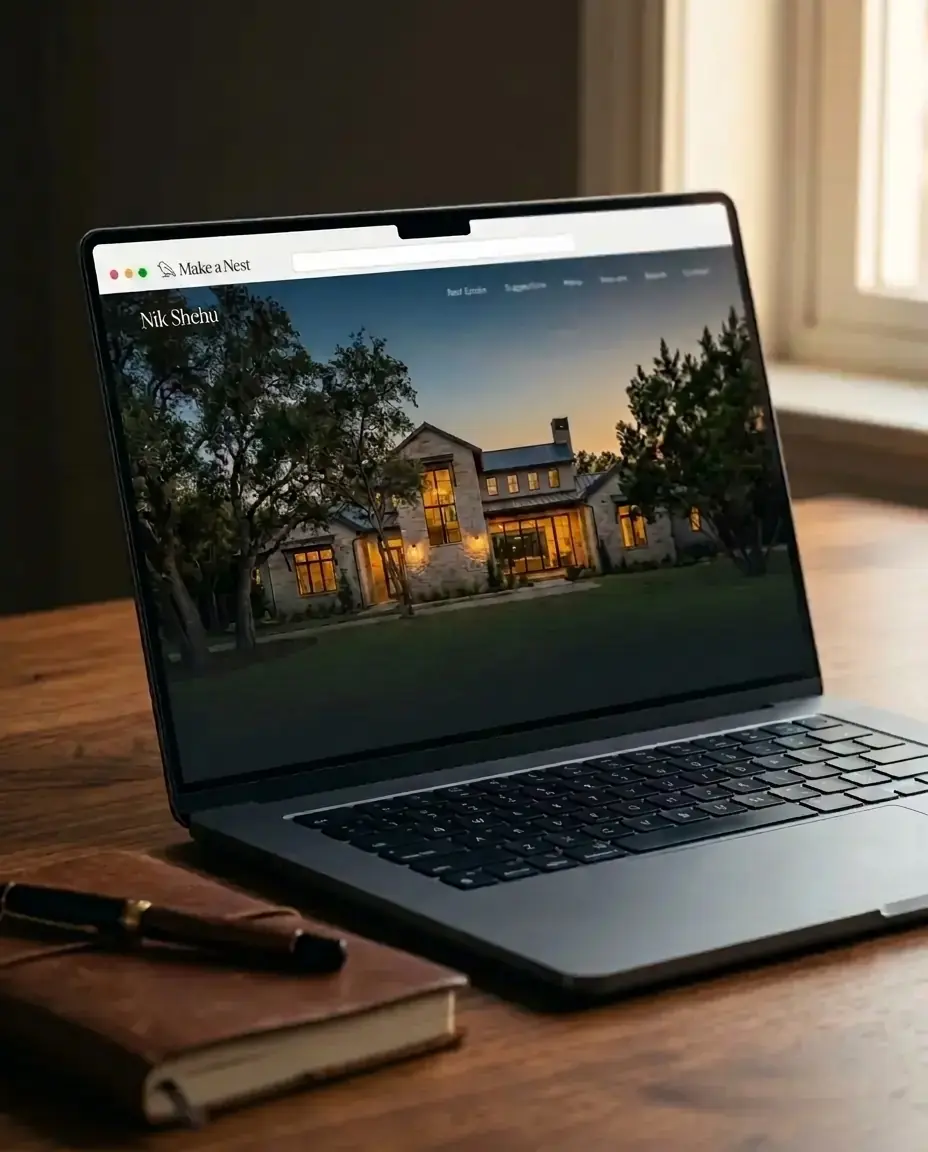
Why Your Bio Link Is Broken (And How a "Nest" Positions You as a Strategic Advisor)
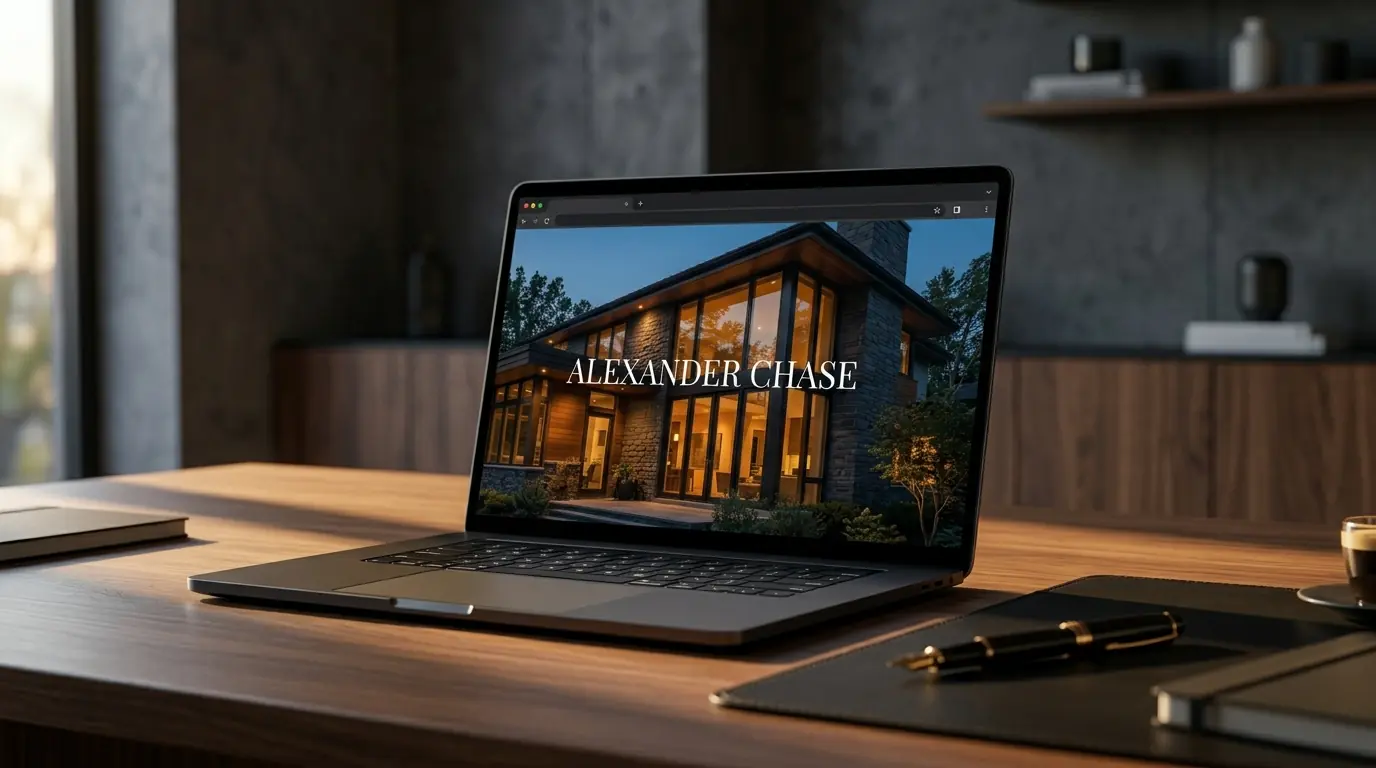
Think about the last time you heard about a new service provider, an interesting professional, or a local business owner. What was the very first thing you did? You opened a tab and Googled their name.
Your prospective real estate clients do the exact same thing. When a mutual friend passes along your name, or a local follower sees one of your educational videos, they immediately look for your link in bio.
But if they click that link and get redirected to a cluttered, corporate brokerage profile page, or worse, a chaotic stack of colorful link-tree buttons, your digital handshake instantly breaks. Instead of meeting a premium, authoritative professional, they encounter a generic layout that screams "order-taker" Realtor.
To command high-end listings and win the trust of modern consumers, you need an online presence that mirrors your actual expertise. Here is why the standard agent bio link is broken, and how shifting to a clean, editorial digital framework transforms you into an indispensable strategic advisor.
1. The cluttered redirect: why brokerage sub-domains fail
Many new and active agents rely heavily on the free profile page provided by their parent brokerage. While these pages are functional for basic compliance, they're structurally designed to benefit the brokerage brand, not yours.
When a high-intent client lands on a standard corporate profile, they're usually greeted by massive corporate logos, generic property search fields, and a sea of competing navigation tabs. Your personal bio is often buried at the bottom in tiny font.
2. Capturing authority instantly with live market data
The typical agent website tries to be an all-in-one search engine, offering a clunky MLS search portal that duplicates what Zillow or Redfin already do much better. This positions you as an "information gatekeeper," a role technology automated away a decade ago. Modern clients don't need you to find houses; they need you to interpret the market.
3. Shifting from property lists to "closed deal case studies"
When agents close a transaction, they typically post a graphic of the house with a large "SOLD" banner stamped across it. While it shows activity, it completely misses the opportunity to demonstrate your strategic value. A transaction notification only tells people you got paid; it doesn't explain how you protected your client's interests.
A truly premium online presence avoids the generic property scroll and instead frames your production as a portfolio of case studies. Every closed deal should be formatted as a clean, professional narrative:
- The challenge: what specific obstacle did the buyer or seller face, tight relocation timelines, unique property defects, an intense multiple-offer scenario?
- The strategy: what precise, market-backed advice did you implement to solve it?
- The result: how did your representation save them time, mitigate risk, or secure more money?
Over time, your website's portfolio transforms into your most powerful credibility tool, justifying your commission structure and setting you apart from part-time competitors.
4. Built for the phone it's actually opened on
Almost every visitor arriving from a bio link is on a phone, mid-scroll, with maybe three seconds of patience before they bounce back to whatever they were doing. That's a brutal environment for a website designed and tested on a desktop monitor, which is exactly how most agent sites (and most brokerage sub-domains) still get built.
5. Own your domain, don't rent it
A subtler problem with relying on a brokerage sub-domain or a free link-in-bio tool: you don't own it. Switch brokerages, and that URL, along with every backlink, every bit of search authority it built, and every bookmark a past client saved, disappears with it. A domain built around your own name follows you for your entire career, regardless of how many times you change sponsorship.
This matters more than it seems at first glance. Real estate careers involve broker changes far more often than most professions, and every time that link changes, you're asking every past client and referral source to update a bookmark they'll probably never get around to updating. Owning your own domain from the start removes that recurring cost entirely.
6. The three pages that actually matter
Agents often overbuild their first website, chasing a dozen pages before a single one is genuinely good. In practice, three pages do almost all the work of converting a bio-link visitor into a lead.
- Your homepage. One clear sentence on who you help and where, your strongest proof point above the fold, and a single obvious next step, not five competing calls to action.
- Your about page. Not a resume. Tell a visitor why you do this work and what they can expect from working with you, the specific, human detail is what a brokerage template can never replicate.
- Your case-study or portfolio page. The credibility engine described above. If you only build one thing beyond the homepage, build this.
Everything else, a blog, a full MLS search widget, a resources library, can come later. Launching with three genuinely strong pages beats launching with twelve mediocre ones.
7. What to put in the bio link itself
Even with a strong website, the actual link text and the landing page it points to matter more than agents usually give them credit for. Don't send every visitor to your homepage by default, think about where they're coming from.
A viewer clicking through from an educational video about a specific neighborhood should land on content related to that neighborhood, not a generic homepage they have to re-navigate from scratch. If you don't have the infrastructure to swap landing pages easily depending on context, that's its own signal that your current setup is working against you, not for you.
The day-one solution: build your Nest
If the thought of designing a custom, high-end website feels overwhelming, expensive, or technically out of reach, you don't have to navigate it alone. You shouldn't have to choose between a multi-thousand-dollar creative agency contract or a generic template.
That's exactly why Make a Nest exists. We build complete, mobile-optimized, professional agent web presences built entirely around your market and your brand voice, live in just 72 hours. Every Nest comes pre-configured with stunning architectural imagery, live localized market-data widgets, and dedicated project storytelling layouts designed to position you as a top-tier advisor.
Stop losing clients to a broken bio link. Treat your digital presence like the premium asset it is.
Quick Answers
Do I need a website before I'm actively working with clients? Ideally, yes. The moment someone hears you're licensed, they'll look you up, having a real destination ready is better than sending them to a bare brokerage sub-page while you figure out a plan.
What if I don't have any case studies yet? Start the about page and homepage first, add the portfolio page once you have even one or two closed deals worth writing up. An incomplete site with strong core pages still outperforms no site at all, and it's far better to launch early with those two pages solid than to delay everything waiting for a portfolio you haven't earned yet.
How often should I update the site once it's live? Treat it as a living asset, not a one-time project. Add a new case study after every closing that's worth telling, and revisit your homepage message whenever your specialty or market focus shifts, a site that never changes reads as stale to a returning visitor, even a good one.
Make a Nest builds working agents a professional website, built around your actual production, live in 72 hours. School Estate students and alumni get the $595 setup fee waived with code SCHOOLESTATE.
Learn about Make a Nest