How to Overcome "Camera Shyness" and Launch Your Real Estate Instagram in 3 Steps
If you feel a wave of mild dread every time you switch your phone camera to selfie mode, you're not alone.
Most real estate agents avoid video marketing for the same reasons: "I hate the sound of my own voice," "I don't know what to do with my hands," or "I'm waiting until I look more polished on camera." We watch high-energy video influencers who seem to speak flawlessly without blinking, compare ourselves to them, and decide to post another static graphic instead.
Here is the truth that will unlock your video strategy: your future clients don't care if you're a flawless internet personality. They're moving to your city, making the largest financial investment of their lives, and they only care if you're knowledgeable and trustworthy.
Video is the fastest way to establish that trust at scale. To get you over the psychological hurdle, you don't need to force yourself to become a charismatic talk-show host overnight, you just need a gentle, low-friction entry point that takes the pressure off your face and puts it back on your expertise. Here is a simple, three-step blueprint to launch your video marketing without the camera anxiety.
1. Shift your mindset: from "self-promotion" to "local education"
The primary reason camera shyness exists is a misplaced focus. When we think video is about us, our hair, our outfits, our accent, we become deeply self-conscious. It feels like vain self-promotion, which naturally triggers our internal critics.
The secret to conquering this is a psychological pivot: stop trying to sell yourself, and start trying to help your viewer.
When you shift your goal to purely educating the public, the pressure evaporates. You aren't stepping in front of the lens to say "look at me, choose me as your agent," you're stepping up to say "here is exactly how to navigate property taxes in this zip code so you don't get hit with an unexpected bill next year."
When you treat video as a public service for your clients' finances, your awkwardness fades because your purpose is greater than your comfort zone.
2. Master the "B-roll + voiceover" strategy (zero face required)
You do not need to show your face in your very first video to make an impact. The lowest-friction way to start publishing is by separating your visual image from your audio track.
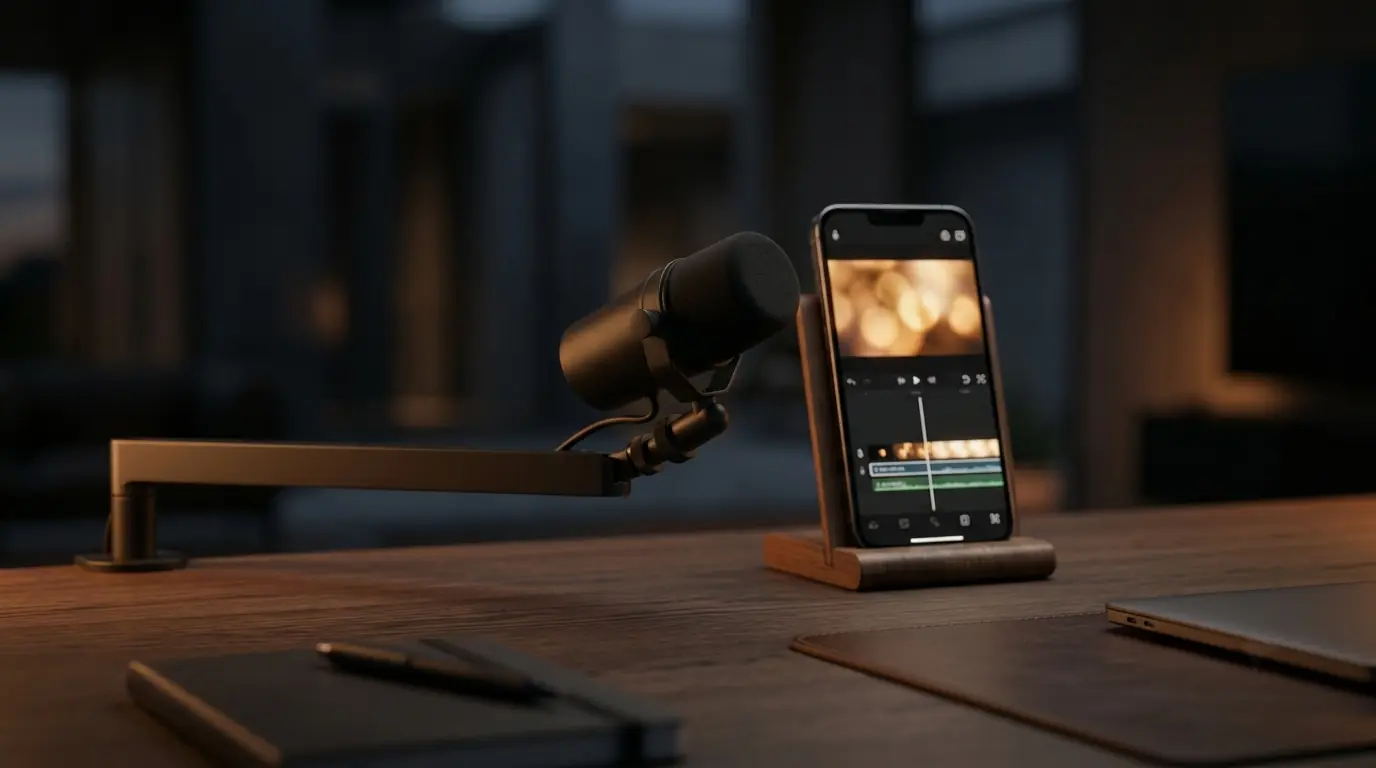
The voiceover layer: bring that atmospheric footage into Instagram Reels or CapCut. Instead of talking directly to the lens, use the built-in voiceover feature to record your audio in the quiet comfort of your car or home office. Read a short script analyzing a quick market update or explaining a homebuyer tip.
Why it works: you have full control over your environment. If you stumble on a word, delete the audio track and re-record it until it sounds exactly right, all while your audience is focused entirely on the high-end, editorial footage of your local market.
3. Lean on a teleprompter app for your first "on-camera" win
When you're ready to make your first on-camera appearance, don't try to wing it. Memorizing paragraphs or speaking off the cuff is a skill that takes years to master, trying it early on will only cause you to freeze, stumble, and quit out of frustration. Instead, let technology lift the heavy burden.
Why it works: because the text sits right next to the lens, you can read your script line-by-line while looking like you're maintaining direct, confident eye contact with your viewer. You won't have to think about what word comes next, so you can focus purely on keeping your tone calm, steady, and professional.
4. Never stare at a blank page again: five topics that write themselves
A surprising amount of camera hesitation isn't really about the camera, it's about not knowing what to say once it's recording. Keep a running list of low-effort, high-value topics so you're never starting from a blank page.
- One term, explained simply. Escrow, earnest money, contingency, pick one confusing term per video and explain it the way you'd explain it to a friend at dinner, not the way it's defined in a textbook.
- A question you got this week. If one client asked it, ten more people watching are silently wondering the same thing. Answer it on camera instead of just replying in a text thread.
- A local update. A new restaurant opening, a road construction update, a neighborhood event, these are easy, low-pressure, and reinforce that you're actually present in the market you sell.
- A quick myth-bust. "People think you need 20% down to buy a house, here's what's actually true." Correcting a common misconception is inherently interesting and positions you as the expert.
- A behind-the-scenes moment. Walking into a home inspection, prepping a listing for photos, these don't require a script at all, just a phone in your pocket and a habit of hitting record.
Traps that keep agents stuck longer than they need to be
Waiting to feel ready. Confidence on camera is built by making videos, not a prerequisite for making them. The tenth video always feels easier than the first, but you only get to the tenth by posting the first one imperfect.
Over-investing in equipment before content. A ring light and a lavalier mic won't fix a blank script. Get comfortable with the phone you already own before spending on gear, most of the b-roll and teleprompter techniques above need nothing more than that.
Deleting anything less than perfect. A slightly awkward, genuine video usually outperforms an over-rehearsed one, viewers respond to a real person more than a polished script. Post the take that's good enough, not the one you've re-recorded fifteen times chasing perfect.
What to do the first time you actually hate your own footage
It happens to almost everyone: you finally post an on-camera video, watch it back, and cringe at your own voice or a nervous habit you never noticed before. This is a normal part of the process, not a sign you should quit.
A useful reframe: you are the only person who hears your voice the way you do, through bone conduction as well as air, which is why a recording always sounds unfamiliar to its own speaker. Your audience has never heard the "inside your head" version, to them, it just sounds like you. That gap between how you perceive yourself and how you're actually perceived closes the more footage you watch back, most people find their tenth video far less cringe-inducing to rewatch than their first.
If a specific habit really is distracting, a filler word, a tendency to look away from the lens, note it once, work on it deliberately in your next few videos, and move on. Obsessively re-watching and re-recording the same clip chasing a flawless take is a bigger threat to your consistency than the habit itself ever was.
Consistency beats perfection every single day in real estate. Your market doesn't need another heavily edited influencer; it needs a grounded, knowledgeable advisor. Start with a silent voiceover this week, progress to a teleprompter next week, and watch your camera shyness turn into your business's greatest asset.
Quick Answers
How long should my first videos be? 30-60 seconds is plenty. A short, focused video that actually gets watched beats a longer one that loses viewers halfway through.
What if I mess up mid-recording? Pause, take a breath, and restart the sentence, most editing apps let you trim the stumble out cleanly. Nobody watching the finished video will ever know it happened.
How soon should I show my face on camera? Whenever it feels manageable, there's no required timeline. Some agents move to face-on-camera within a week using the teleprompter method, others spend a month building comfort with voiceovers first. Either path works as long as you keep posting consistently.
Make a Nest builds working agents a professional website, built around your actual production, live in 72 hours. School Estate students and alumni get the $595 setup fee waived with code SCHOOLESTATE.
Learn about Make a Nest